The Philippines is often cited as the counterpoint to the East Asian miracle economies. We are the oldest democracy in Asia, and at the same time, we have sunk to the level of the “Sick Man of Asia”. Many advocates of stronger authoritarian rule in our country state that we are suffering from “hyper-democracy”. Some even label our system as “demo-crazy”. Supposedly, too many freedoms have been granted to the Filipino people which have been abused, and this has led to the current deteriorating situation.


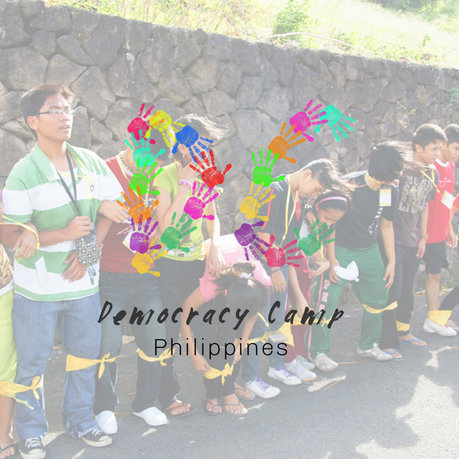
Participants of PCCED's seminars


Some of these so-called abuses include an electoral process that does not reflect the people’s sovereign will due to systemic cheating; a population that casts its vote unthinkingly, leading to the election of incompetents to govern; legislators more concerned with their pork barrel instead of the common good; a weak judicial system; the presence of a much-too frivolous media; self-interested bureaucrats that have no concern for the public trust they have sworn to uphold; the general lack of respect for human rights and the rule of a law; and a public that is increasingly becoming apathetic and cynical towards our democracy. 

All of these lead to a system of governance that is a failure in many aspects as documented in many international studies. These include the World Bank measures of governance, Transparency International’s Corruption Perceptions Index, Amnesty International’s criticisms of heightened abuses against human rights, or the disturbing trend chronicled by the International Federation of Journalists as regards the freedom of the press and the murder of journalists.

The solution, some say, is a strongman or authoritarian leader, a Filipino Lee Kwan Yew or a Mahathir Mohammad, perhaps even a new Marcos, wielding an iron fist to set things right and get things done by eliminating “too much democracy”. Control the media, prevent protest actions against government, silence any dissent, and limit the freedoms of citizens in order to achieve economic development. These were the things that our neighbors in Asia have done, and these too we must adopt to arrest our downward slide.


Participants of PCCED's seminars

Many scholars have also pointed to the historical experience of the Philippines as one of the reasons why this is happening. In fact, some claim that due to the almost 350 years of Spanish conquest and 50 years of American “tutelage”, these colonial experiences have “aborted” Philippine civilization and have created a “damaged culture”. This is turn has fostered the lack of love and pride in the country. Today, 1/3 of Filipinos surveyed said that they would leave the country if given the opportunity, and more than 8-million Filipinos are already abroad seeking greener pastures.  

Thus, we have the twin problems of lack of understanding of our democratic system, and the absence of love for the motherland. In the 20 years after the Marcos dictatorship was overthrown and democracy restored, we have not addressed squarely these issues, and now, they are coming back to haunt us.

Democratic gains may be reversed. One of the critical determinants in this is the failure of democracies to consolidate and deliver economic and social development – the so-called “democratic deficit”. More importantly, it is when people fail to understand the true responsibilities of citizenship in a democracy that the foundations of democratic governance are eroded. And this is happening now in the Philippines. There is a sense that Philippine democracy is back-sliding, that many of the actions taken by the present government are detrimental to the consolidation of democracy: from the assault on constitutional bodies and check and balance mechanisms, to corruption, to the sheer impunity demonstrated by the state apparatus against dissenters. Yet people remain unconcerned, and are focused on their day-to-day survival.

Much of these problems can be traced directly to a weak and ineffective education on the crucial elements that comprise the training for citizenship in the Philippines. Lessons on history, government and politics, as well as values become memorization exercises, as students are taught these things for examination purposes only. Concern for the common good, love of country, and citizenship in a democracy become concepts that are useful only in the classroom. Teachers are not prepared to teach basic concepts of democracy such as respect for diversity, human rights, rule of law, or the importance of transparency, accountability, debate, participation, and the peaceful resolution of conflict.


Participants of PCCED's seminars

People then have a belief that our democratic system is a luxury that can be let go in the face of economic imperatives, or national security. Thus, there is a pressing need to upgrade and improve the teaching of Civic Education in the Philippines.  
Democracy is a complex system to run, and there must be purposive instruction on how to live in this system and make it work. Without this, democracy can be hijacked by the powerful elite, or it can quickly degenerate into the tyranny of the majority.  

Therefore, it is of paramount importance that education ON democracy, and FOR democracy be prioritized. Citizens, especially the youth, must be made to understand what it means to live in a pluralistic, tolerant and just society. It is in this context that the Philippine Center for Civic Education for Democracy was created, in order to address these issues head-on. 

Education for democracy is inter-generational work. But PCCED is making a commitment to begin the process now and help in the consolidation of democracy in the Philippines.